Energy Production
More Clean Energy
112CO2 and Freixo ETAR
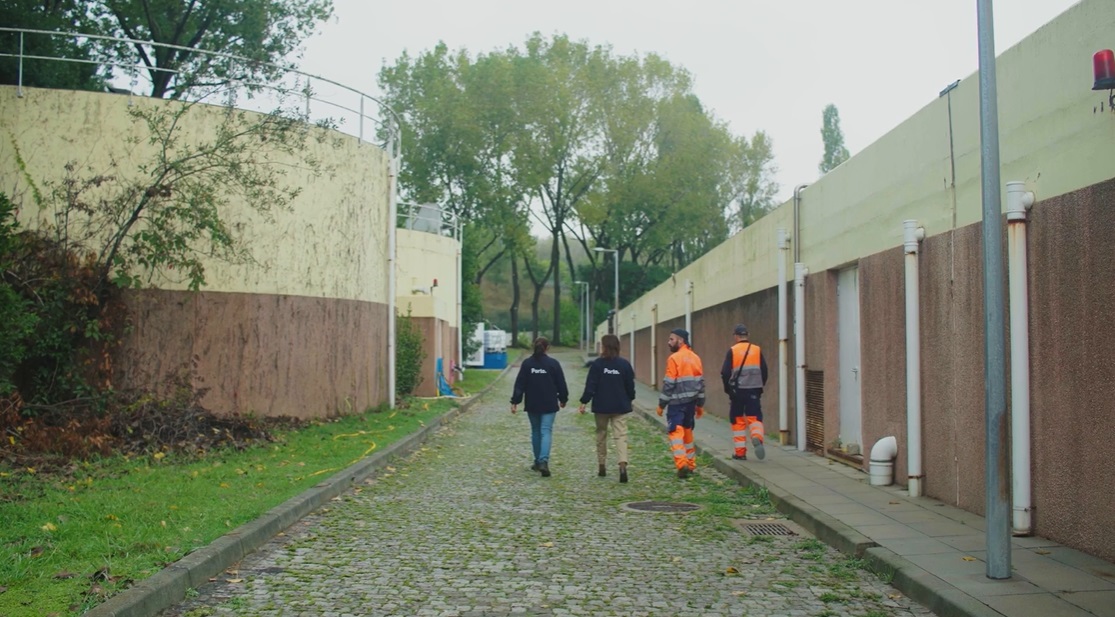
The 112CO2 project and the production of biogas at the Freixo ETAR are two fundamental initiatives that reinforce the city of Porto’s commitment to the production of clean energy and the reduction of carbon emissions.
112CO2, led by FEUP, uses innovative technology to convert methane into hydrogen and carbon, without CO₂ emissions, presenting a more sustainable and economical alternative for hydrogen production in industrial and mobile applications. At the same time, at the Freixo ETAR, biogas generated from wastewater treatment is used to produce thermal energy, with new technologies being studied to maximize its production and use.
These projects reflect Porto’s commitment to cutting-edge technologies that not only drive the energy transition, but also move towards a self-sufficient and carbon-neutral city.
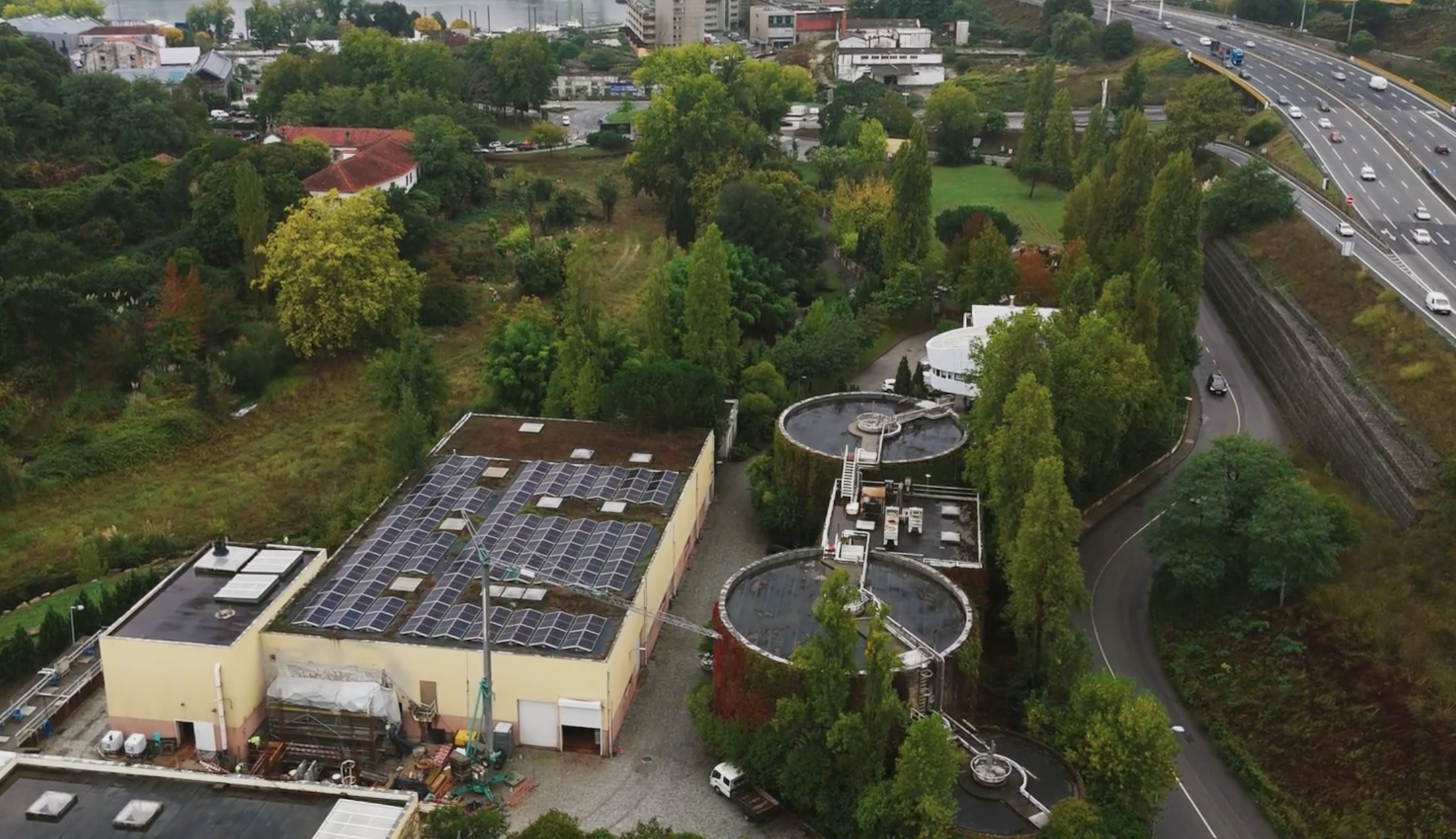
Energy production without the emission of greenhouse gases/pollutants.
This project is characterised by the development of a technology that allows for energy production without the emission of greenhouse gases/pollutants. The responsible team aims tol develop this low-cost, sustainable, and rapidly implementable technology to use in both stationary and mobile applications.
In this context, the technology converts methane (which can be biomethane or natural gas) into carbon and hydrogen, without generating other pollutants. If natural gas is used, this process is expected to achieve a 50% cost savings compared to the current method. When biogas is utilized, the estimated savings increase to 90%.
Regarding stationary applications, taking the chemical and petrochemical industries as examples, the hydrogen produced could be used in fuel cells to generate electricity and convert iron ores into metallic iron. This change will enable the supply of hydrogen to neighbourhoods or districts.
Globally, the ammonia industry accounts for approximately 55% of the hydrogen produced, followed by refineries at around 25%, and methanol production at roughly 10%.
The energy “that the planet needs”
The chemical reaction transforming methane into hydrogen and carbon is referred to as methane cleavage or methane decomposition.
“The success of the project will allow for the rapid production of energy based on natural gas, but without CO2 emissions, thereby gaining time for the planet to develop other technologies that utilise only renewable energy sources. In any case, methane cleavage will remain one of the most effective technologies for removing atmospheric CO2 when combined with the biogas industry,” explains Adélio Mendes, a researcher at the Laboratory of Process Engineering, Environment, Biotechnology, and Energy (LEPABE) at the University of Porto (FEUP) and the head of the research team for this project.
The 112CO2 project has secured €3.5 million in European funding and includes partners such as the Faculty of Arts at the University of Porto (FLUP), Spanish State Agency Superior Council for Scientific Research (CSIC), the German Aerospace Center (DLR), and the École Polytechnique Fédérale de Lausanne (EPFL), in Switzerland. Several European companies are also involved, including Quantis (Switzerland), Paul Wurth (Luxembourg), and PixelVoltaic (Portugal).
The Freixo Wastewater Treatment Plant processes urban wastewater
from Porto’s eastern region, producing primary and biological sludge. This sludge is stabilized through anaerobic digestion, a process in which organic matter is decomposed in the absence of oxygen and at a constant temperature of 35ºC, generating methane and carbon dioxide. This method not only reduces the total volume of sludge and its associated treatment and disposal costs but also produces a high-value renewable energy resource: biogas.
At the Freixo ETAR, biogas is currently used to generate the thermal energy required for the digestion process. In pursuit of energy neutrality, various projects are being developed aimed at reducing energy consumption and enhancing the value of the sludge produced at the ETAR, including the redesign and expansion of the anaerobic digestion process. This allows for maximizing biogas production and adopt new technologies for its treatment and valorization.
In addition, a Research and Development (R&D) project is underway, focused on developing decentralized systems for the production of syngas from ETAR sludge, using a gasification process. The syngas obtained from the sludge will be purified and can be used in cogeneration systems or in Solid Oxide Fuel Cells (SOFC), enabling highly efficient generation of electrical and thermal energy, with no emissions to the atmosphere. Águas e Energia do Porto will play a crucial role by testing this innovative technology through the installation of a mobile modular unit at the Freixo ETAR.